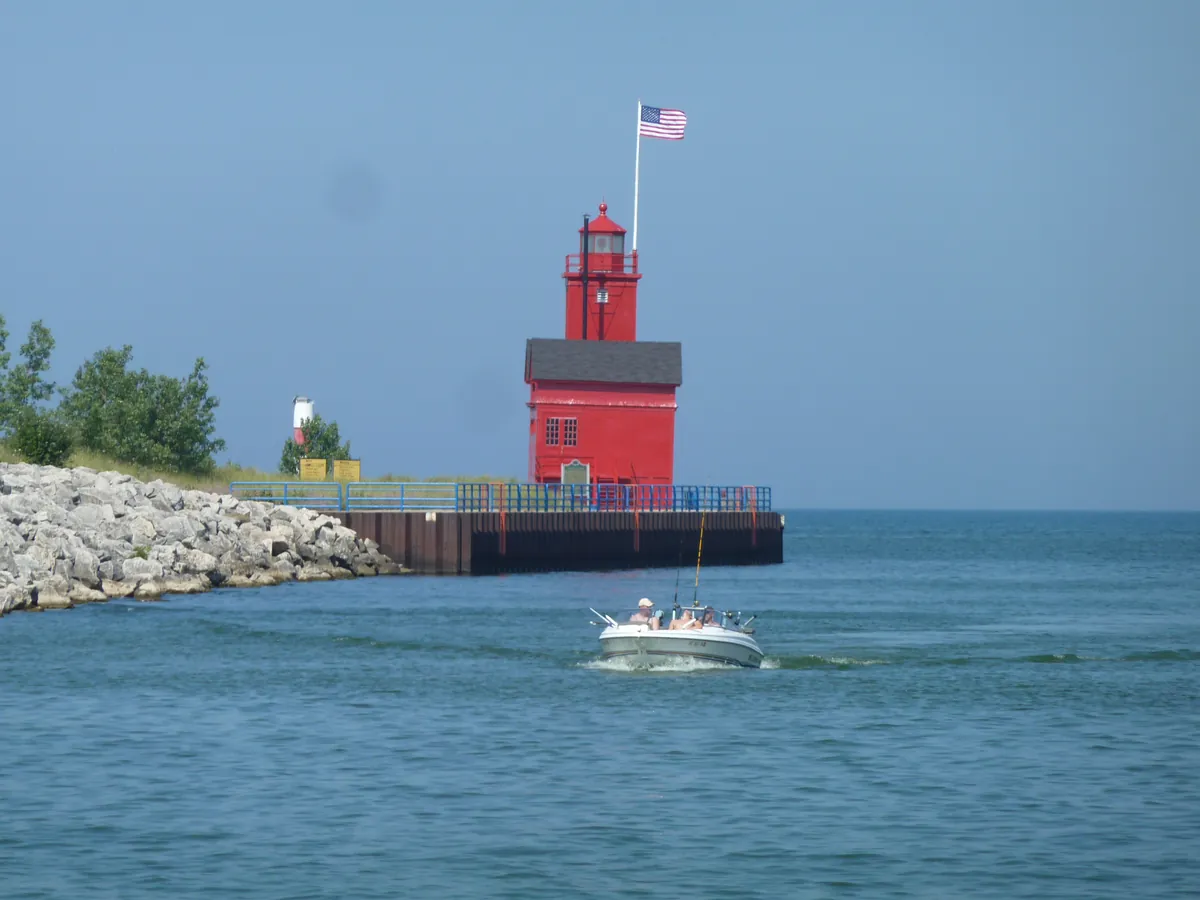
Grand Rapids sits on the banks of the Grand River, 25 miles east of Lake Michigan. The river, once a stretch of rapids, marked the point where ships could no longer navigate, making it a natural hub for trade and settlement. This geography made it a meeting point: the Hopewell and later Odawa people established villages here, living along the bluffs above the river.
In 1806, Joseph and Madeline La Framboise established the first European-American trading post in West Michigan on the Grand River. Following Joseph’s death, Madeline continued the business, expanding fur trading operations and earning a reputation that led to a merger with the American Fur Company. By 1826, Louis Campau, often credited as the city’s founder, built his own trading post and blacksmith shop, establishing a permanent presence. He later bought 72 acres from the federal government for $90, naming his tract Grand Rapids.
By the second half of the 19th century, Grand Rapids shifted from a trading post to a lumbering center, processing timber floated down the Grand River. This industry paved the way for its next incarnation: furniture manufacturing. The 1876 Centennial Exposition in Philadelphia brought national attention to Grand Rapids furniture, solidifying its reputation as "Furniture City." By 1911, the city housed 47 factories, employing 8,500 people, with names like Baker Furniture Company and Steelcase becoming prominent. This era also saw the construction of the country's first hydroelectric generator in 1880.
The city continued to build. In 1969, Alexander Calder’s abstract sculpture, *La Grande Vitesse*, was installed downtown, becoming the first public art in the U.S. funded by the National Endowment for the Arts. Later, civic leaders and entrepreneurs, including Amway co-founder Jay Van Andel, spearheaded renewal projects, funding the renovation of the Pantlind Hotel and the construction of the Amway Grand Plaza Hotel tower. This commitment to civic development continued, with projects like the Van Andel Institute for biomedical research, opened in 2000, and the Medical Mile, which today attracts health science businesses and world-class facilities.
These forces—resource extraction, manufacturing, and civic investment—created a city of makers. Today, Grand Rapids is home to institutions like the Gerald R. Ford Presidential Museum, the Grand Rapids Art Museum, and the Frederik Meijer Gardens & Sculpture Park. Its legacy of craftsmanship extends to its modern identity as "Beer City USA," with a thriving craft brewery scene that draws visitors to the area.