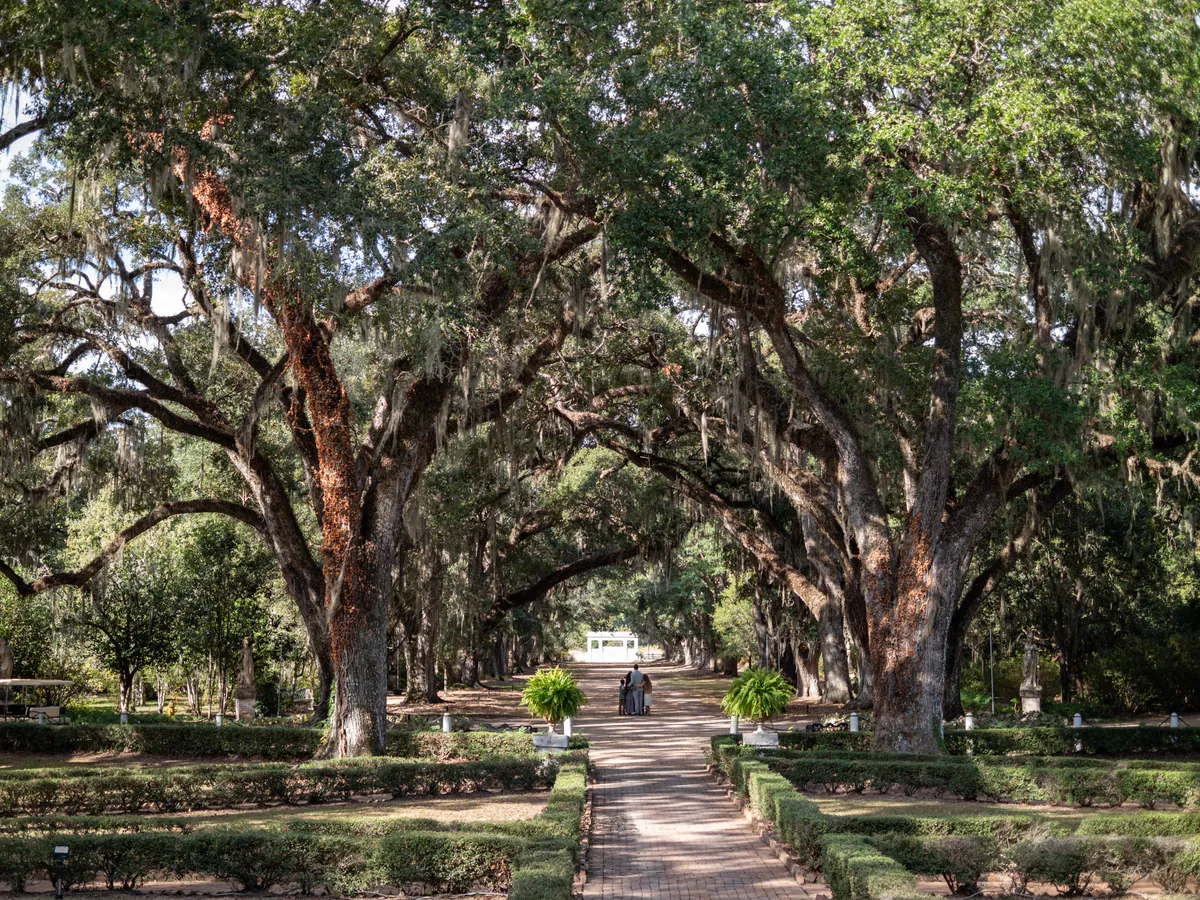
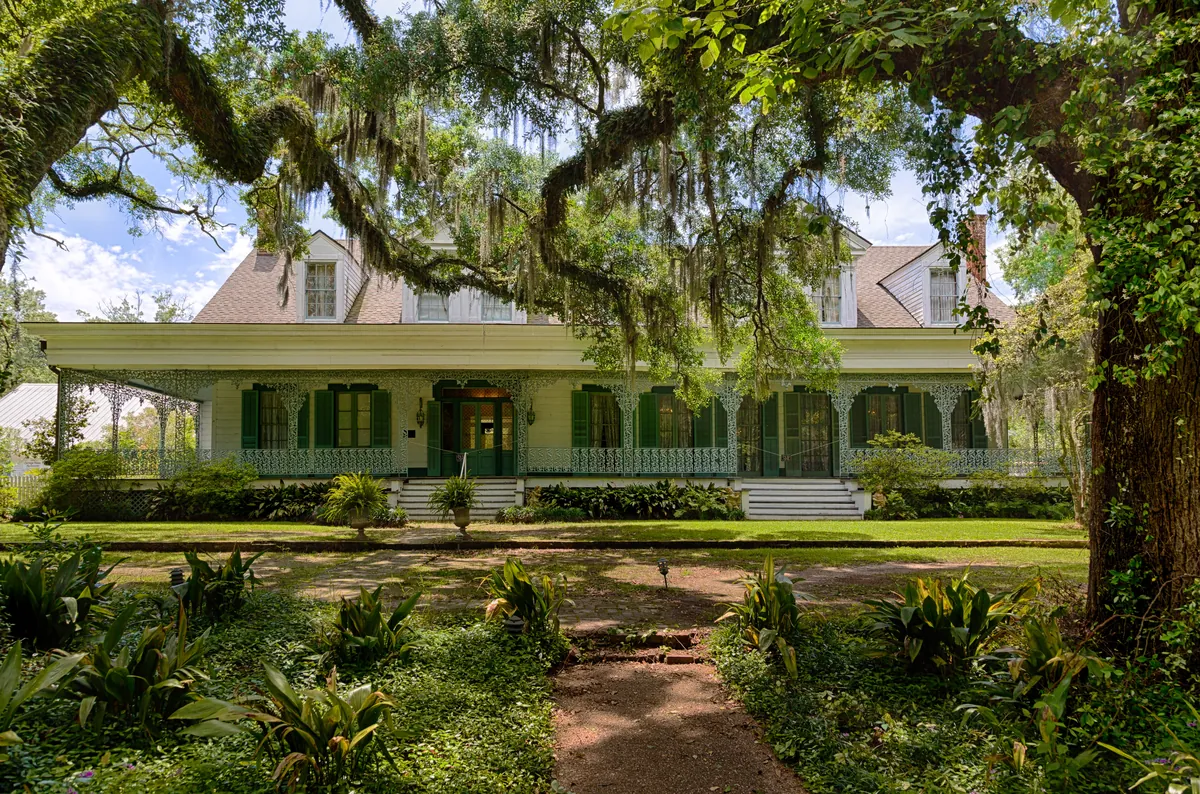
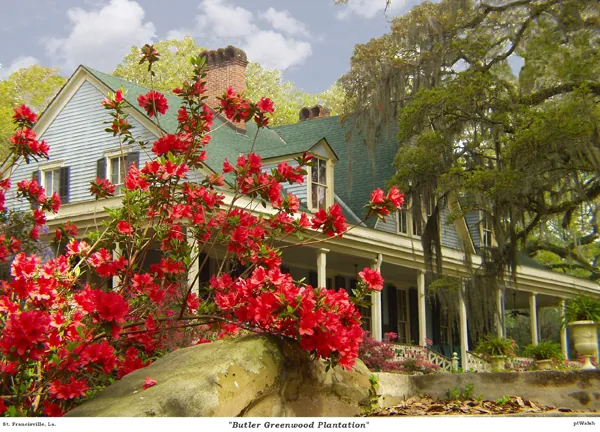
By the 1830s, the Feliciana bluffs had become one of the richest plantation districts in the lower South, and the great houses that define the landscape today were built on cotton, forced labor, and borrowed European ambition. Daniel and Martha Turnbull returned from their honeymoon tour of European estates and broke ground on Rosedown in 1835, surrounding the house with 28 acres of formal gardens — the layout is still there, still legible. A generation earlier, Whiskey Rebellion fugitive David Bradford had built what became The Myrtles in 1796; its 85-foot cast-iron gallery remains among the most intact plantation ironwork in Louisiana. Butler Greenwood has run continuously since the 1790s under the same family, whose records show 96 enslaved people and 1,400 acres producing cotton, sugar, corn, and molasses in 1860 alone. The wealth is gone. The houses stayed.