Top picks in Acadiana
The places most worth your time here.
Connect your Cour circle to see which places friends and family recommend here.
Connect Cour →Landmarks
102 places worth the detour
tap the eye to open · swipe or use buttons to browse
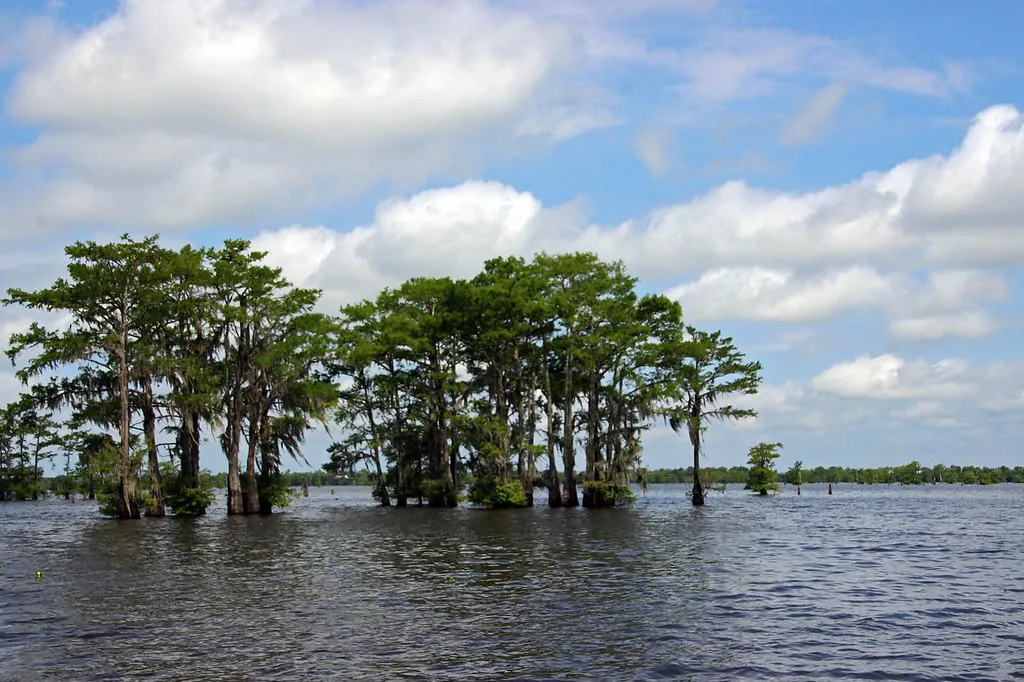
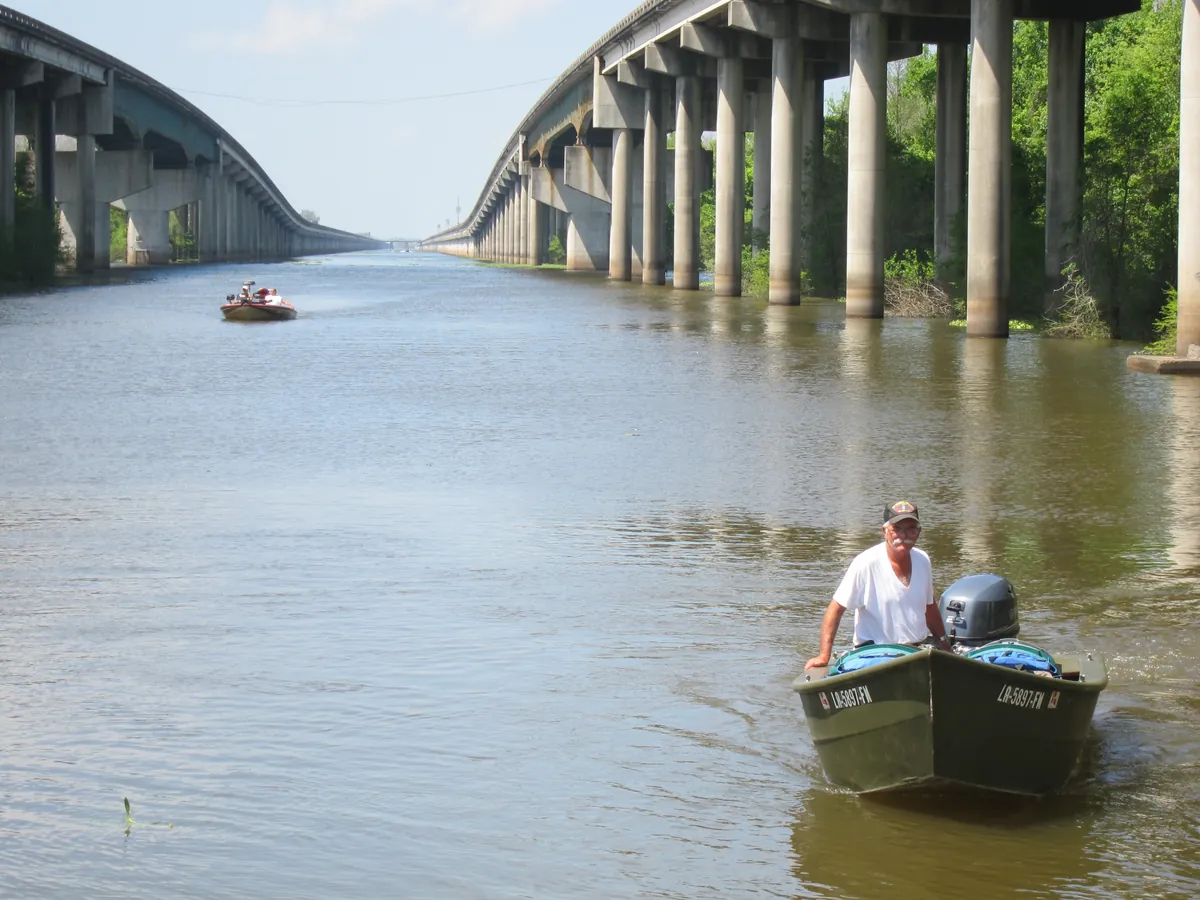
The land itself shaped what would happen here. South of a line of low hills, the terrain flattens into dry prairies and then dissolves — into marshes, bayous, and the slow coastal wetlands that edge…
Read the full storyOn the map
Tours
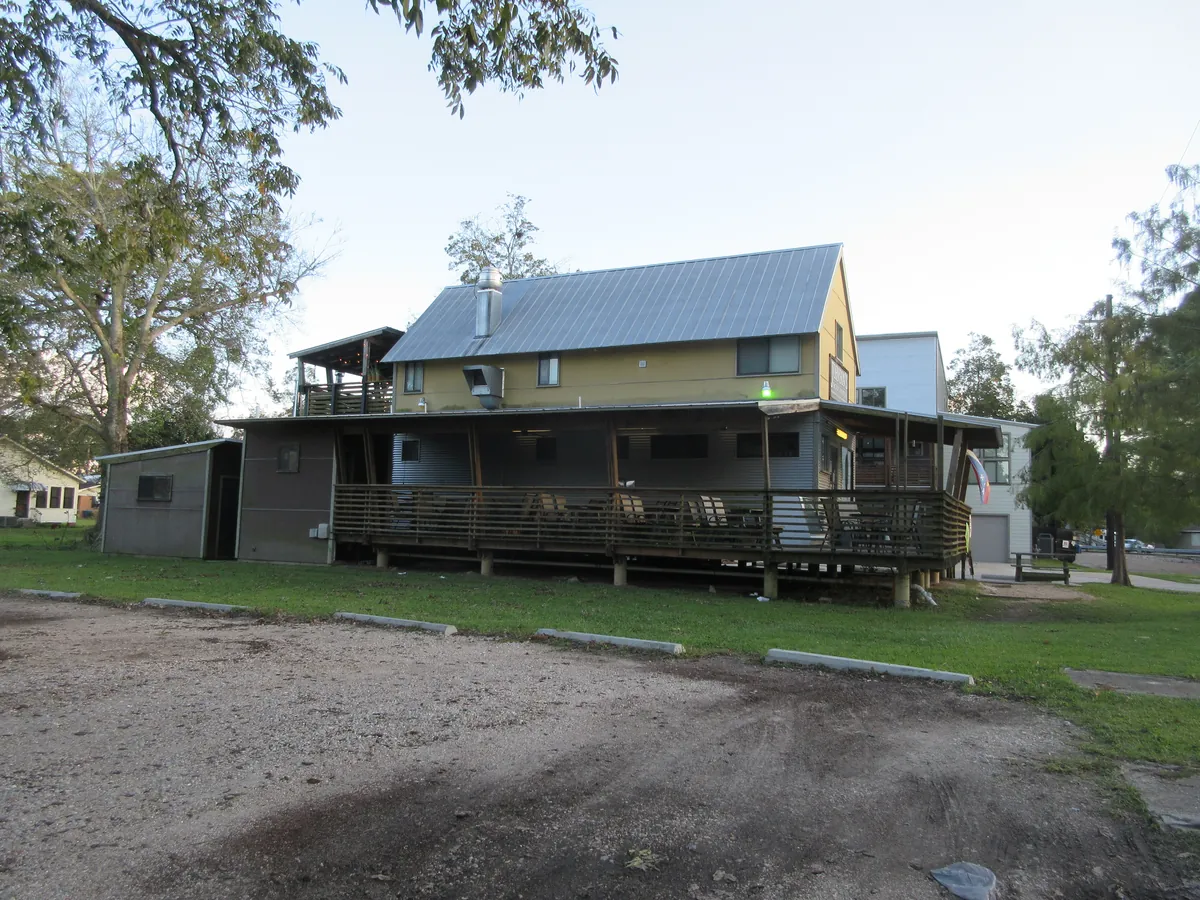
Boudin is cooked rice and pork stuffed into a casing and sold at gas stations, meat markets, and butcher shops — Cajun fast food, eaten standing up, squeezed from the casing into your mouth on the way somewhere. This run visits four of the most serious stops in Acadiana, each with a different interpretation of the same recipe: the smokehouse that may have sold boudin commercially first, the nationally famous best-in-class operation, the nine-time award winner, and the Breaux Bridge market that extends the trail into crawfish country. Bring a cooler.
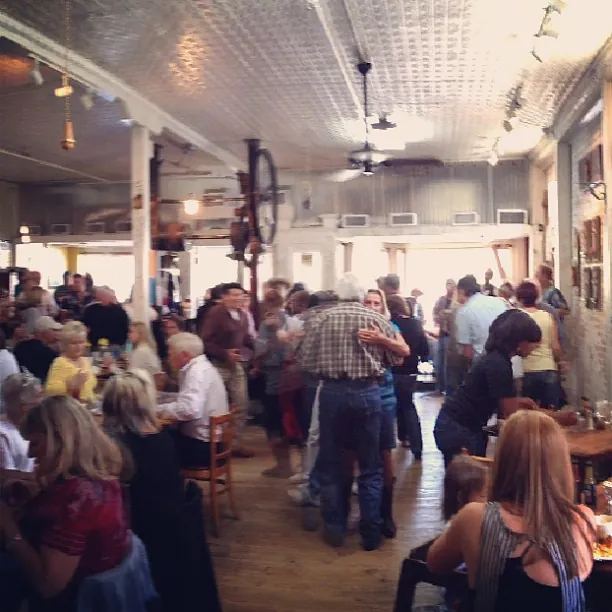
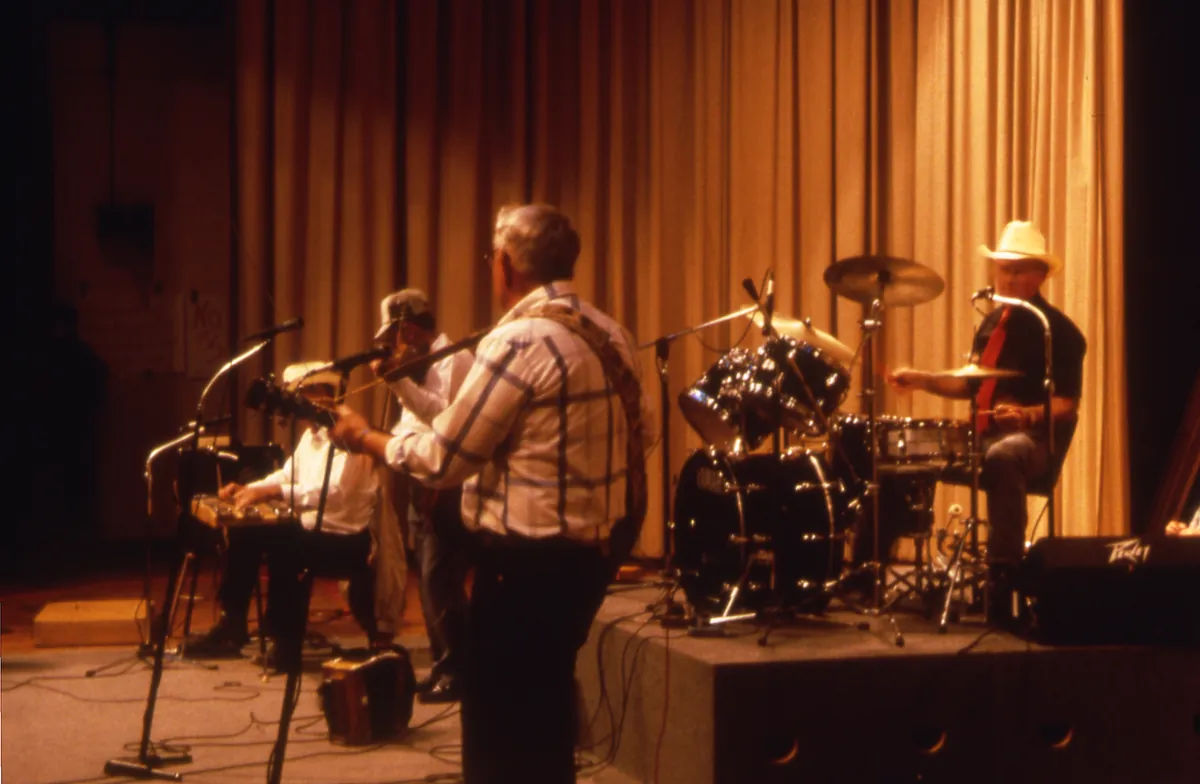
Cajun music is not a heritage performance — it is a working calendar, and Saturday is the day it runs. Fred's Lounge in Mamou opens at 8 a.m. and broadcasts live over KVPI, the way it has since the 1960s. Marc Savoy's accordion shop east of Eunice holds its jam the same morning. Breaux Bridge serves the zydeco breakfast. La Poussière fills its floor with two-steppers that night, and the Blue Moon in Lafayette closes the loop. One Saturday. Five rooms. The grandparents taught the steps.
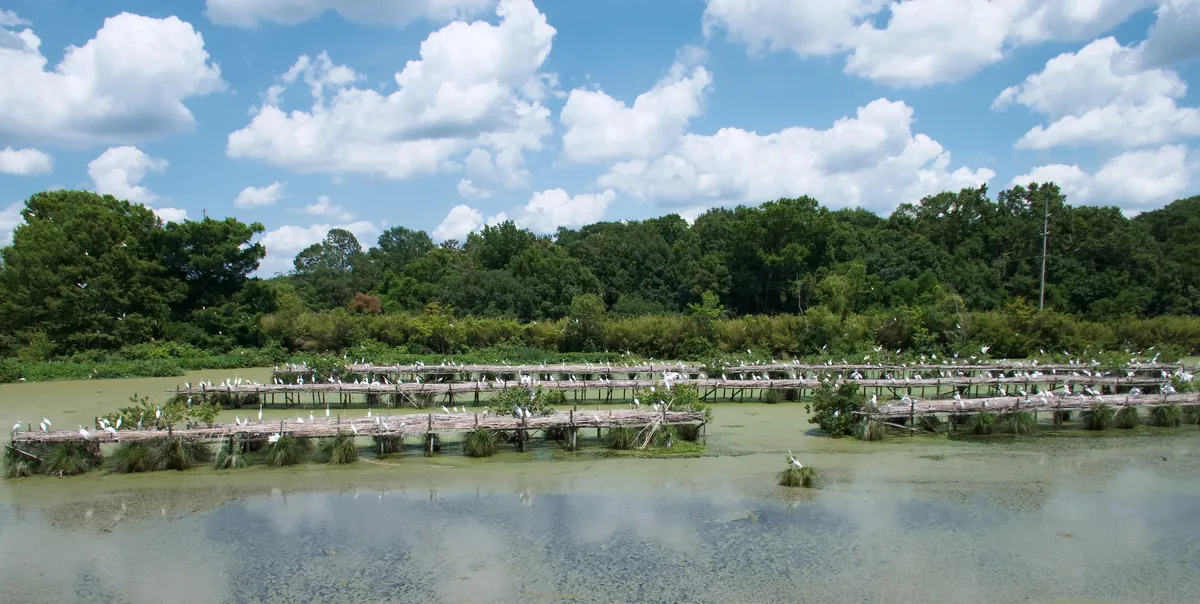
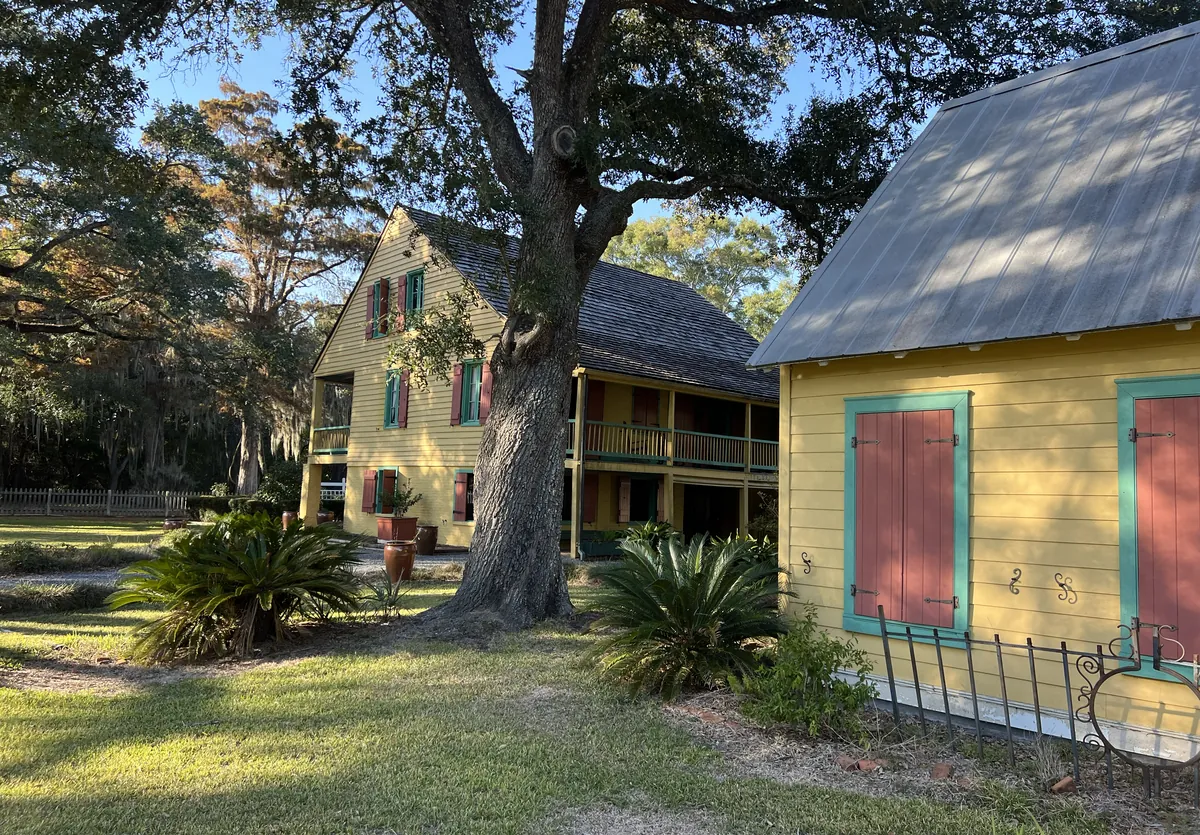
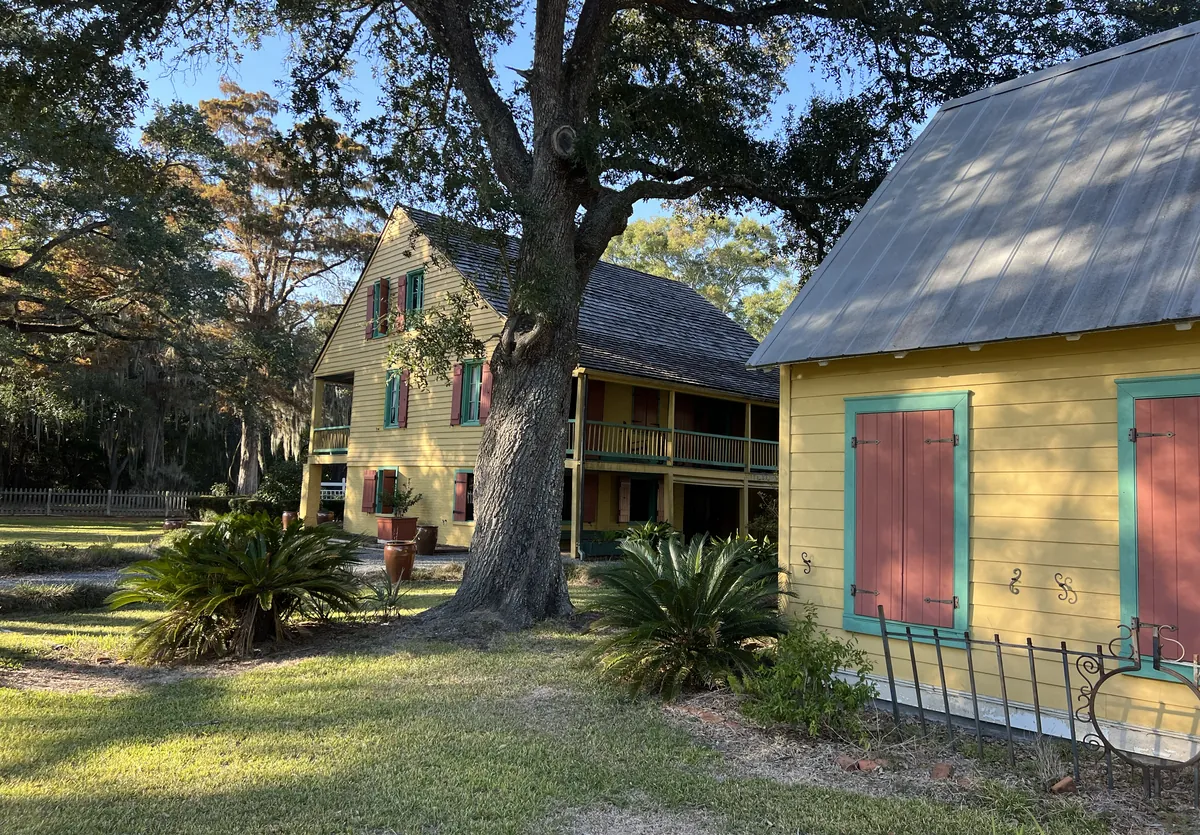
Bayou Teche was the main street of Cajun Country for two centuries — the Chitimacha say a dying giant snake carved it. New Iberia holds the records and the Konriko Rice Mill, opened 1912 and still running. Avery Island sits on a salt dome that rises 163 feet above the surrounding marsh — the McIlhennys started making Tabasco there in 1868 because the salt was already coming up. St. Martinville is where Longfellow set Evangeline — he never visited — and the oak, the Acadian Memorial, and the cathedral cemetery sit within a hundred yards of each other.
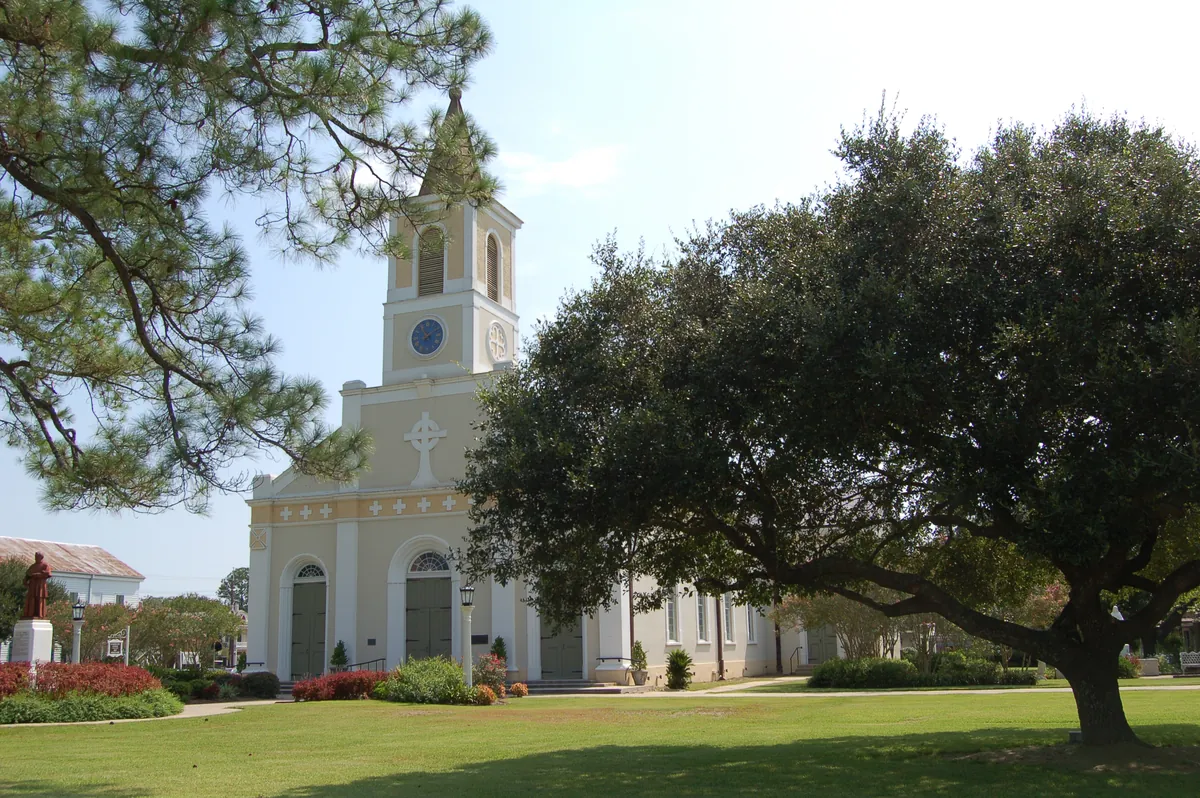
In 1755, the British expelled 10,000 Acadians from Nova Scotia. Roughly 3,000 found their way to Louisiana. This trip visits every major site of that story within a few miles of each other — from the NPS cultural center in Lafayette through the first settlement at the Attakapas post to the Wall of Names in St. Martinville where descendants still come to trace their family name in granite.
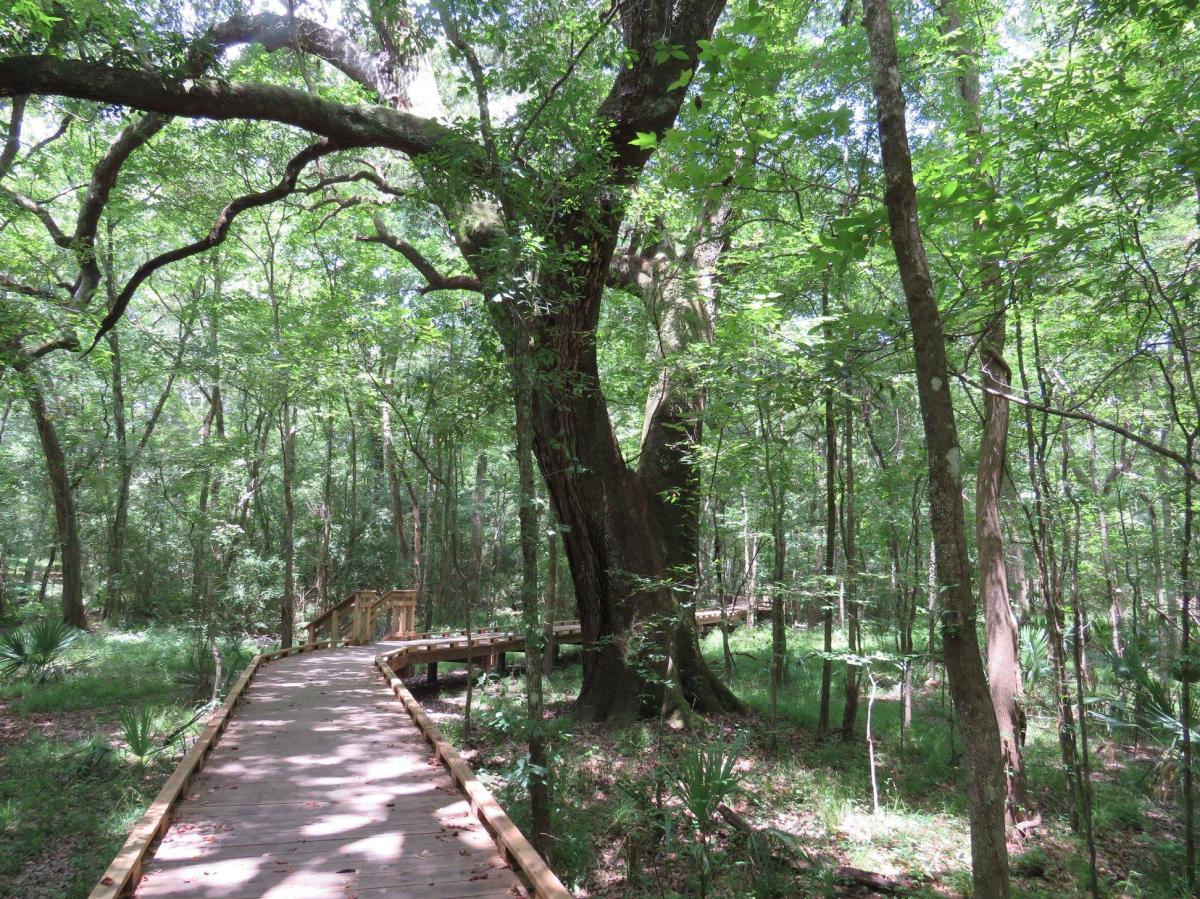
Twenty thousand nesting birds rise off Lake Martin at dawn in the spring. The McIlhennys' Jungle Gardens started in 1905 with eight snowy egrets E.A. McIlhenny saved from plume hunters; they brought the species back. Lake Fausse Pointe is a 6,000-acre cypress swamp you reach by boat. Acadiana Park's bottomland holds 180 bird species in spring migration. Chicot, the largest state park in Louisiana, sits in pine uplands. The dance halls get the visitors; the alligators and the egrets keep the place.
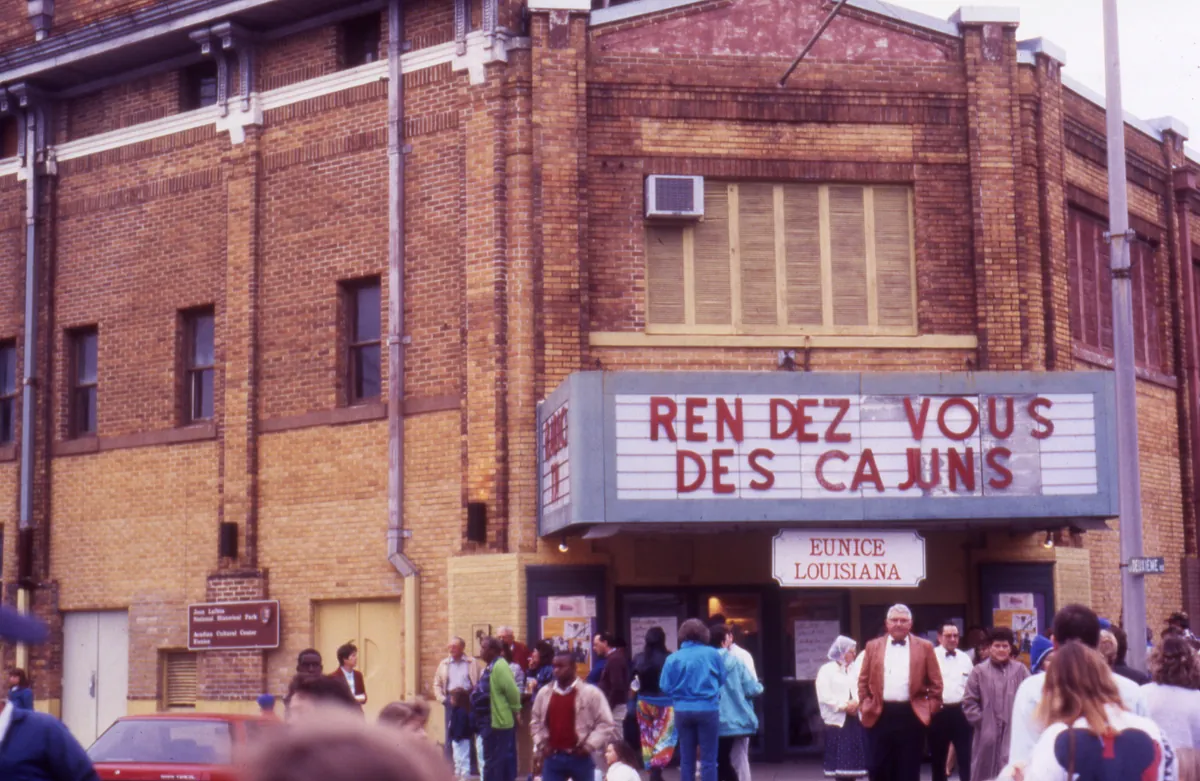
North of Lafayette the bayou ends and the prairie begins — flatter, drier, and older than Cajun country to the south. Opelousas (1720) is the third-oldest city in Louisiana, where the Acadians showed up in 1765 to start over. Grand Coteau is where the Vatican certified its only North American miracle, in 1867. Washington was a steamboat port for cotton and tobacco and is fewer than a thousand people now. Eunice's smokehouses anchor the boudin trail. The Saturday-night fais do-do came out of these rice towns, not the bayou ones.
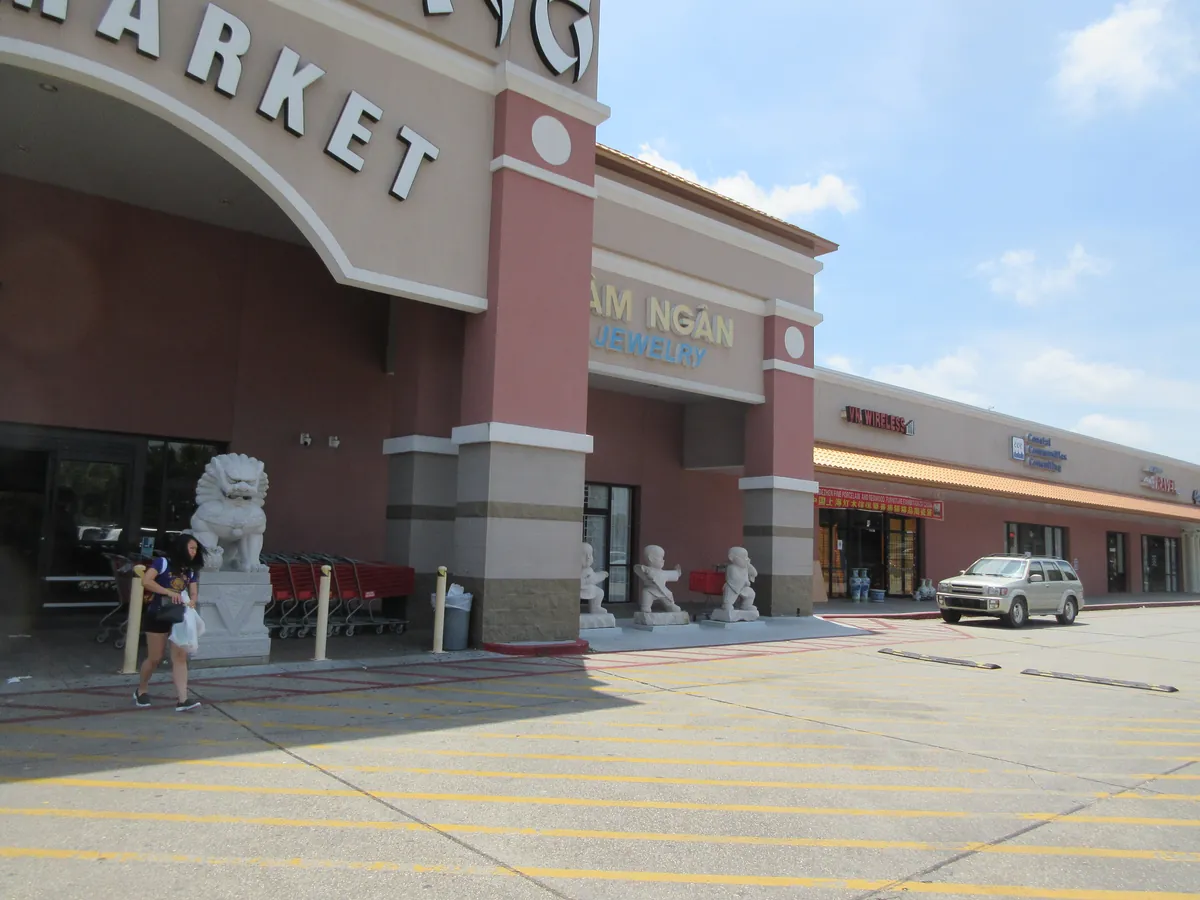
The bayou kept getting added to. French and Spanish made the founding layer, then the German Coast got its name, then Irish hands dug the canals, then Acadians built a country in the swamps, then Sicilians took the Quarter and Lebanese took Mid City, and Vietnamese and Croatian families joined the seafood economy that fed the state. This is the layered version of how Louisiana came to be Louisiana — one stop per wave, in the order they arrived.
Reading
Most of Louisiana's story gets told from the bayou — water, cypress, moss. But north and west of Lafayette, the bayou gives way to open prairie: flat rice-farming land across St. Landry, Evangeline, and Allen parishes that looks nothing like the swamp Louisiana projects to the world. The Cajun Prairie is where the ground was drier, where German and Creole influences shaped a culture distinct from the bayou story, and where accordion and fiddle traditions held long after other parts of Acadiana moved on. Crowley, founded on this wet prairie in 1886, became the Rice Capital of America. Eunice, forty miles northwest of Lafayette, is where Cajun French is still spoken in the streets. In Mamou, Fred's Lounge has broadcast live Cajun music on Saturday mornings for decades. The tourism industry sells the swamp. The prairie is where the farming and the music stayed tangled together long enough to become something people still show up for.
Boudin is not a luxury item. It is pork, rice, seasoning, and smoke stuffed into a casing — what you make when you use everything and waste nothing. That logic runs straight back to the Acadian refugees who arrived in south-central Louisiana after 1764 with very little and built a cuisine out of what the land gave them. Wallace and Lula Johnson were selling smoked sausage commercially on St. John Street in Lafayette by 1937 — the claim that they were the first to do so is old enough that nobody disputes it anymore. Their granddaughter Lori runs the place today. In Scott, Don Ware's Best Stop has earned enough attention from food publications to make Highway 93 a legitimate pilgrimage, while Don's Specialty Meats on the I-10 service road has nine Scott Boudin Cook-Off wins behind it. Three operations, one thread: a culture that survived expulsion and made something worth driving across a state to eat.
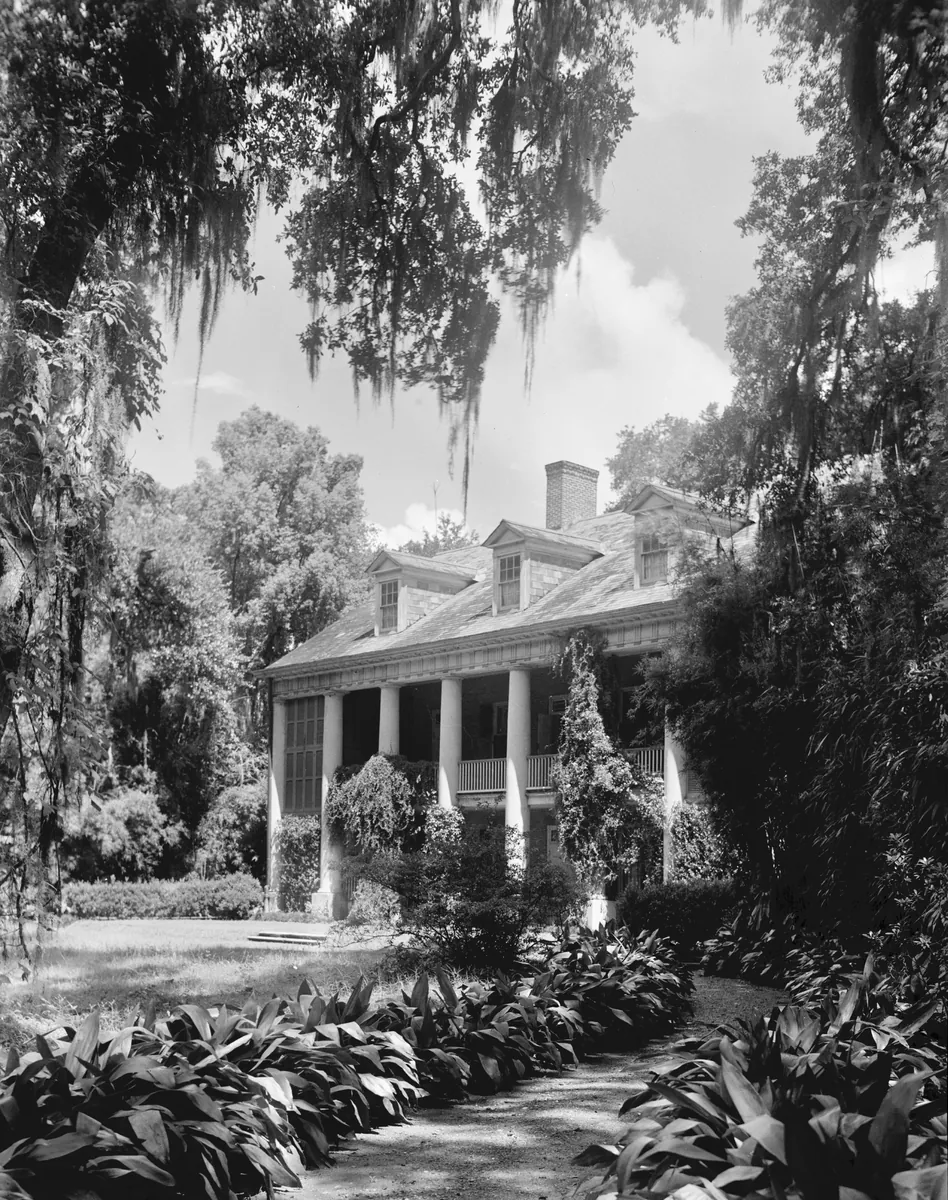
Sugar built the Teche the way it built everything it touched — completely, and on the backs of people who never held the deed. David Weeks raised his house on the bayou in 1834; by the start of the Civil War, more than 200 enslaved people worked his land. The attic held what most plantations buried: 17,000 documents naming 1,112 people across the Weeks family holdings. Down the bayou in Jeanerette, the museum on Main Street tells what the plantation tour skips — the grinding machinery, the mill workers, the industrial weight of Louisiana's most important crop. Franklin carries the ledger in its streetscape: more than 420 antebellum homes still standing along a corridor of live oaks that were saplings when the money was made. The wealth is visible. The archive makes visible who made it.
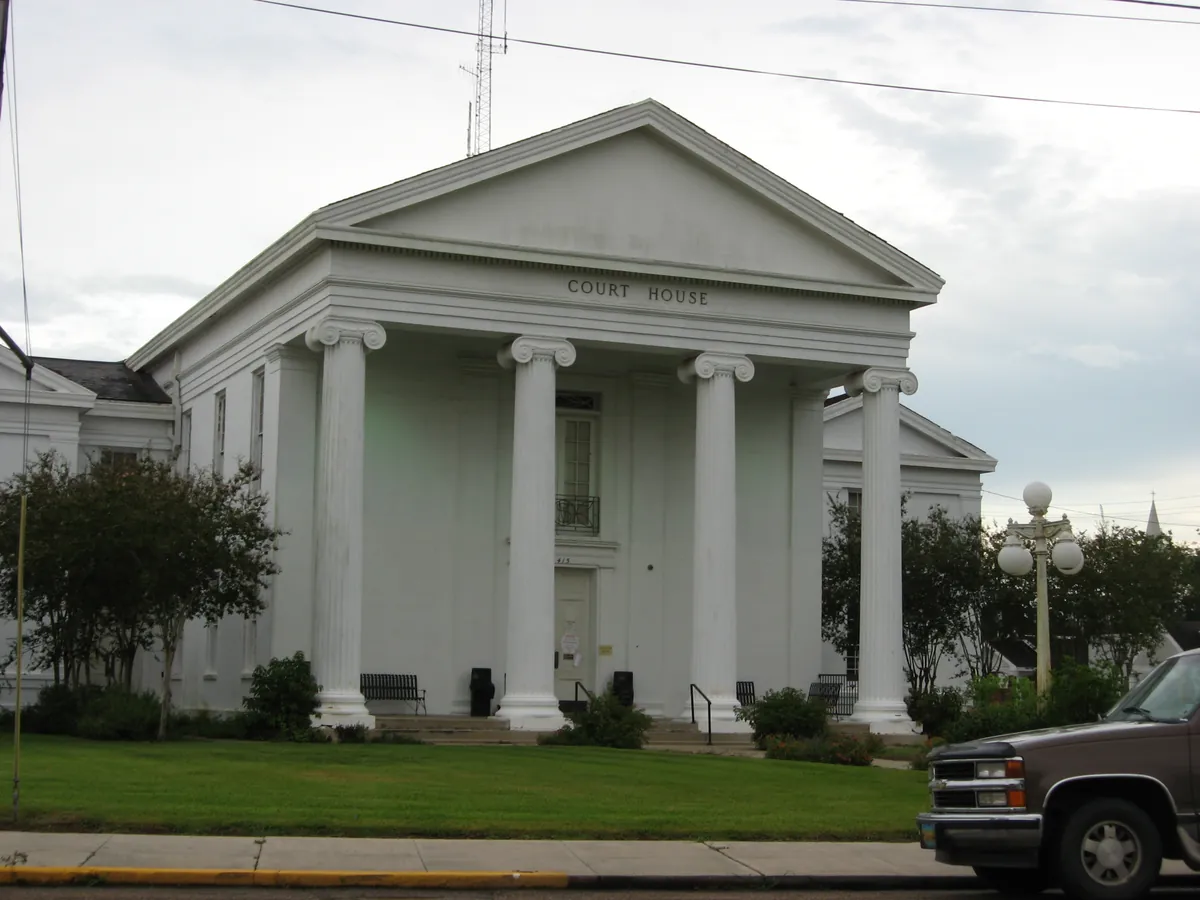
Before the Acadians arrived, a different French story was already here. The French settled the prairies and bayous in the early 1700s on Atakapa-Ishak and Chitimacha land. Then the Revolution sent a second wave — Royalist refugees who'd known opera houses and Versailles — to St. Martinville, where in 1830 they built one of the earliest opera houses in Louisiana and earned the town its nickname: Le Petit Paris. In 1843, a Capuchin priest named Frère Sigur founded Abbeville around a public square modeled on those in France, giving European geometry to a landscape of bayou and prairie. These weren't the dispossessed Acadians building back what was lost — these were people who arrived with expectations and met the swamp on their own terms. What they left is still legible: a courthouse square, a restored opera house, a town that calls itself Le Petit Paris without irony.
The Attakapa-Ishak, Choctaw, Chitimacha, and Opelousa peoples inhabited this land for thousands of years before any European set foot here. The Chitimacha named what they knew: the word *teche* comes from their word for snake, and their creation legend says Bayou Teche was carved by a dying giant serpent — geology confirms it is an abandoned channel of the Mississippi. They were here when the French arrived, when the Acadians came, when the parishes were drawn. Every other indigenous people in Louisiana was removed, relocated, or dispersed. The Chitimacha stayed. Their reservation at Charenton in St. Mary Parish sits on land their ancestors occupied for at least 1,300 years — not a resettlement, an unbroken claim. The tribe has been federally recognized since 1916. Their language nearly went extinct before recorders captured it in the early 20th century; a revitalization program now carries it forward. The land under Acadiana had a name before it had a name.
They were expelled from Canada after the Seven Years' War. The Acadians who survived the deportation reached Louisiana in waves through the 1760s and after, and the bayou country took them in. They settled along Bayou Teche among the Attakapa-Ishak peoples already living there, and the cultural interplay that followed — Acadian, Creole, enslaved African, free people of color, Native — is what Louisiana's first state park, opened at Maison Olivier in 1934, was built to interpret. In 1821, an Acadian named Jean Mouton donated land for a Catholic chapel along the Vermilion River; the settlement that grew around it became Lafayette. The language survived in the kitchens, the music, the parish lines. It still does.
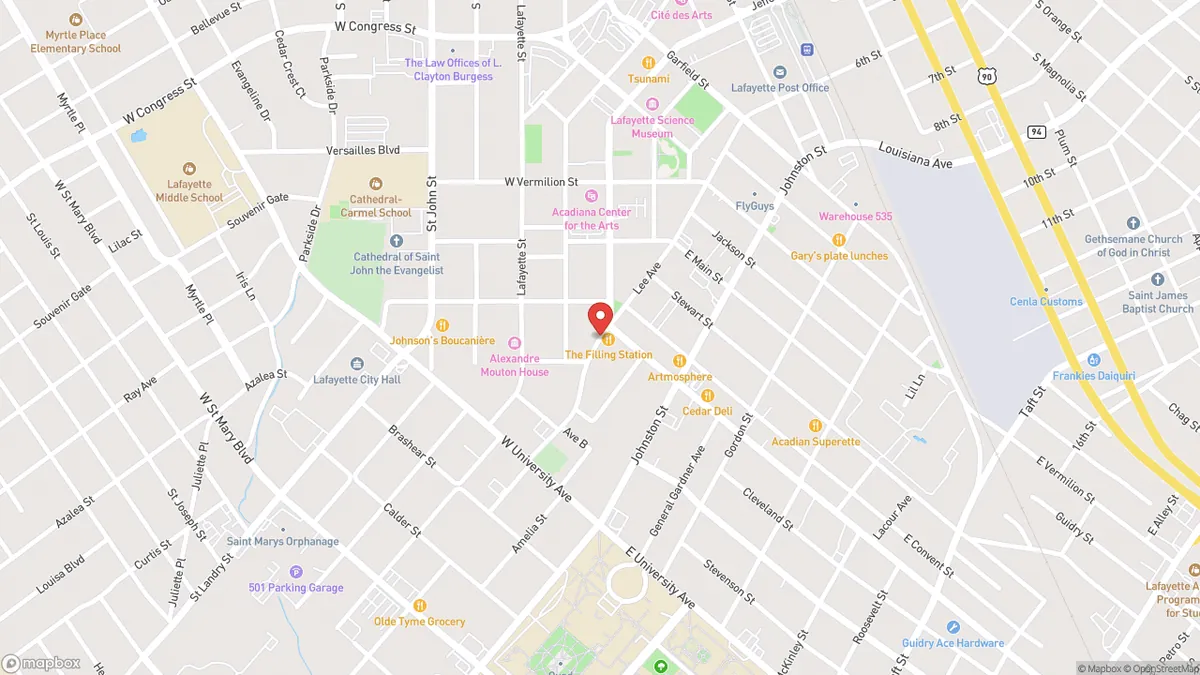
Cajun French is not Parisian French. It is a dialect that developed over 200 years in isolation from France, shaped by Acadian, Native American, Spanish, and African influences, and spoken in kitchens and dancehalls across the Louisiana prairie long after it disappeared from schools and public life. In the mid-20th century, children in Louisiana were beaten for speaking French at school. By the 1960s, a generation had grown up deliberately not teaching their language to their children — ashamed of what made them different. The 1974 revival that produced Festivals Acadiens also produced CODOFIL, the Council for Development of French in Louisiana, which began fighting to bring the language back into schools and public life. Today French immersion programs operate in Lafayette Parish public schools. The University of Louisiana at Lafayette offers the only francophone PhD program in the Western Hemisphere. The language is not dead. It is battered and diminished and fighting back. When you hear an old man in a dance hall give instructions to the band in French, you are hearing something that almost didn't survive.
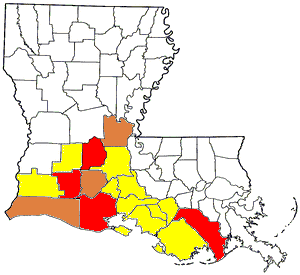
Edwin Edwards started his political career on the Crowley City Council in 1954. By the time he was done, he had served sixteen years as Louisiana's governor — more than twice any other person in the state's history — and eight years in federal prison. He was both. Born near Marksville to a sharecropper's family, fluent in Cajun French, elected governor four times on a coalition of Cajun and Black voters that Louisiana had never seen before, he built the Superdome, rewrote the state constitution, modernized oil and gas taxation, and named Black Louisianans to positions of power when almost no one in the South was doing that. He was also, by his own admission, a high-stakes gambler, a relentless womanizer, and eventually a convicted racketeer who extorted millions from casino license applicants. He survived two federal trials — hung jury, then full acquittal — before the third one finally got him in 2000. In 1991 he ran against David Duke in a gubernatorial runoff. The bumper sticker read 'Vote for the Crook. It's important.' He won 61 to 39. He died at 93, at home, in 2021, having in his final years married a woman 61 years his junior, fathered a child at 86, and starred in a reality television show. He once said the only way he'd lose was if he were caught with 'a dead woman or a live boy.' Louisiana is the only place in America that would produce a man exactly like him, and the only place that would re-elect him three times knowing exactly what he was.
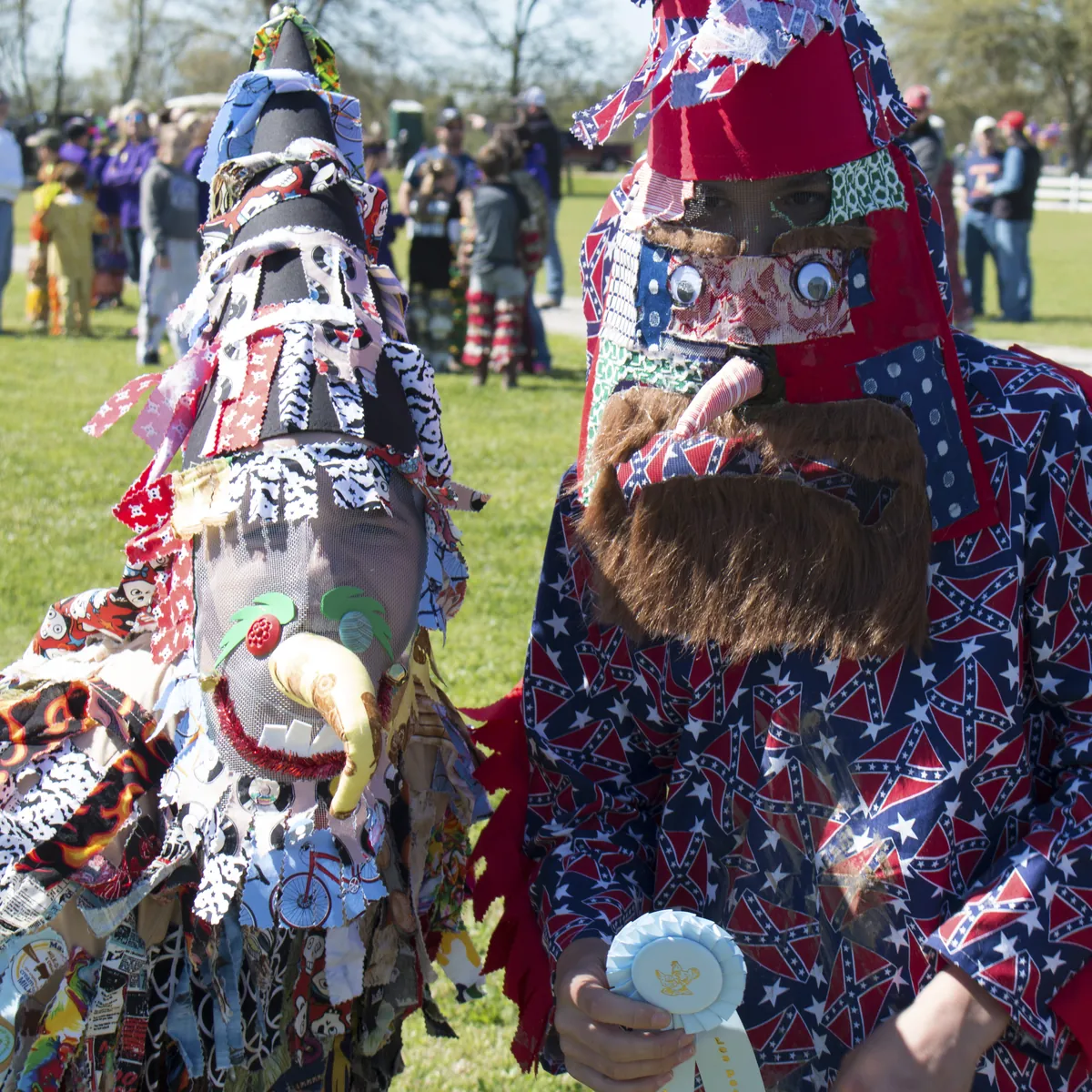
The courir de Mardi Gras — literally, the Fat Tuesday Run — is a rural Cajun tradition where disguised revelers convene before dawn, form a costumed band, and travel by horseback or tractor-drawn trailer through the countryside, calling on neighbors and performing comic antics in exchange for a chicken, rice, and sausage — all ingredients for a communal gumbo served that evening. The tradition arrived with the Acadian exiles from the fête de la quémande, a medieval French custom of socially acceptable house-to-house begging that traces to pre-Christian Brittany. The fowl are donated alive, requiring revelers to chase and catch them — a scene that is genuinely medieval and genuinely joyful. Runs happen in Mamou, Church Point, Eunice, Tee Mamou, and dozens of communities across the Cajun Prairie; the Faquetaique Courir near Lafayette is participatory. Every run ends the same way: a communal gumbo, cooked from everything the community gave.
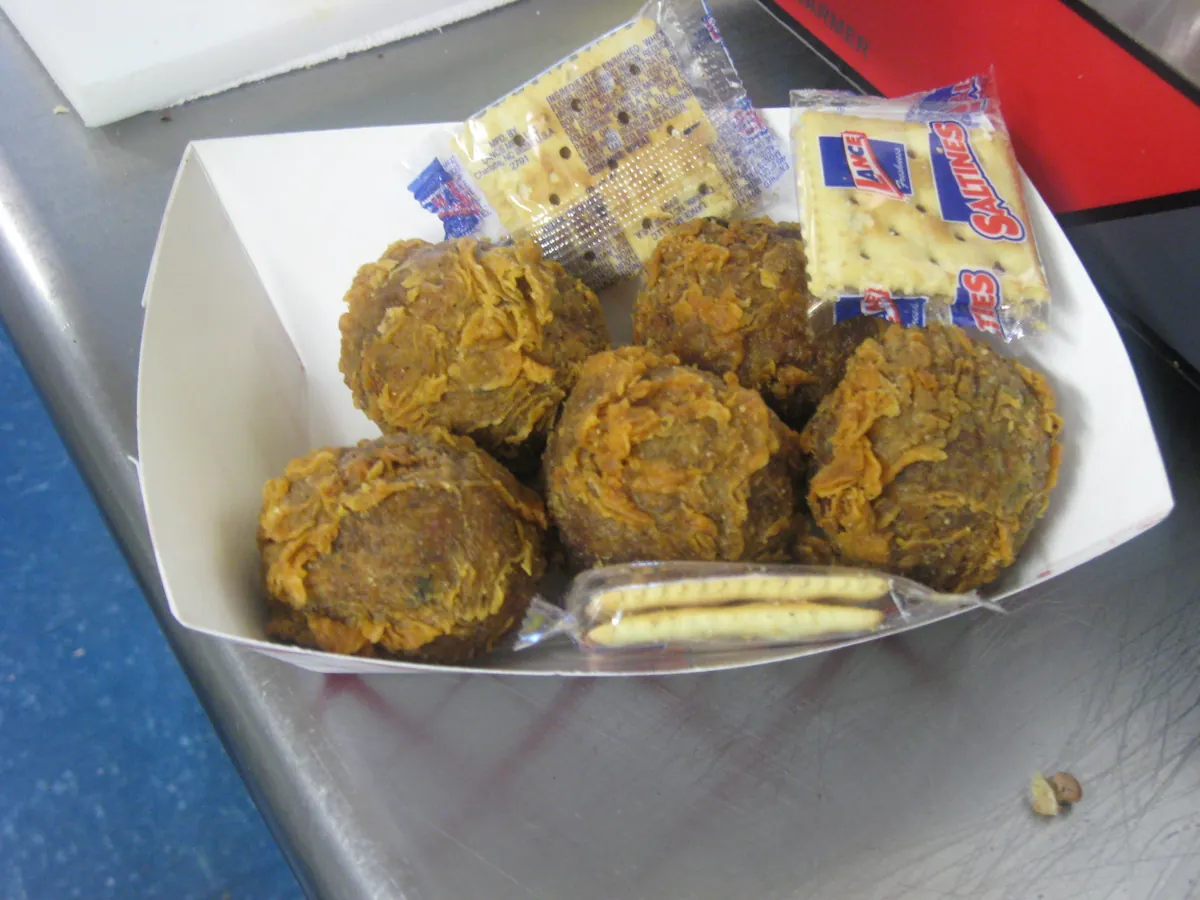
Boudin is cooked pork and rice seasoned with onions, peppers, and Cajun spice, stuffed into a sausage casing, steamed or smoked, and sold at gas stations, meat markets, and butcher shops across the Cajun prairie. It is not a restaurant food. It is a road food, a morning food, a stop-on-the-way food. You eat it standing in a parking lot, squeezing the filling from the casing directly into your mouth. The casing is discarded. This is not considered unusual. Boudin grew out of the boucherie — the communal pig slaughter where Cajun families gathered to process a hog for winter and found uses for every part of the animal. Rice extended the meat; seasoning made it something to look forward to. The Johnson family in Eunice was among the first to sell it commercially in the 1930s and 1940s. Today the town of Scott, five miles west of Lafayette on I-10, has been designated the Boudin Capital of the World by the Louisiana State Legislature. The debate over who makes the best link is perpetual, local, and sincere.
Before refrigeration, the arrival of cold weather in Cajun Country meant one thing: boucherie. Neighbors gathered at a farm before dawn to slaughter a hog and process every part of it before the day ended. Nothing was wasted. The intestines became the casing for boudin and sausage. The blood became boudin rouge. The rendered fat became lard for cooking. The backbone went into a stew. The skin was fried into cracklins. The communal labor fed the whole neighborhood and cemented the social bonds that held rural communities together through isolation and hardship. The boucherie is the origin of Cajun food culture — the reason boudin, cracklins, tasso, and smoked sausage are so embedded in daily life here. A few families still hold traditional boucheries each winter. The tradition also survives commercially: in the boudin trail, in the butcher shops that process whole hogs on order, and in the cracklins sold in brown paper bags at gas stations across Acadiana.
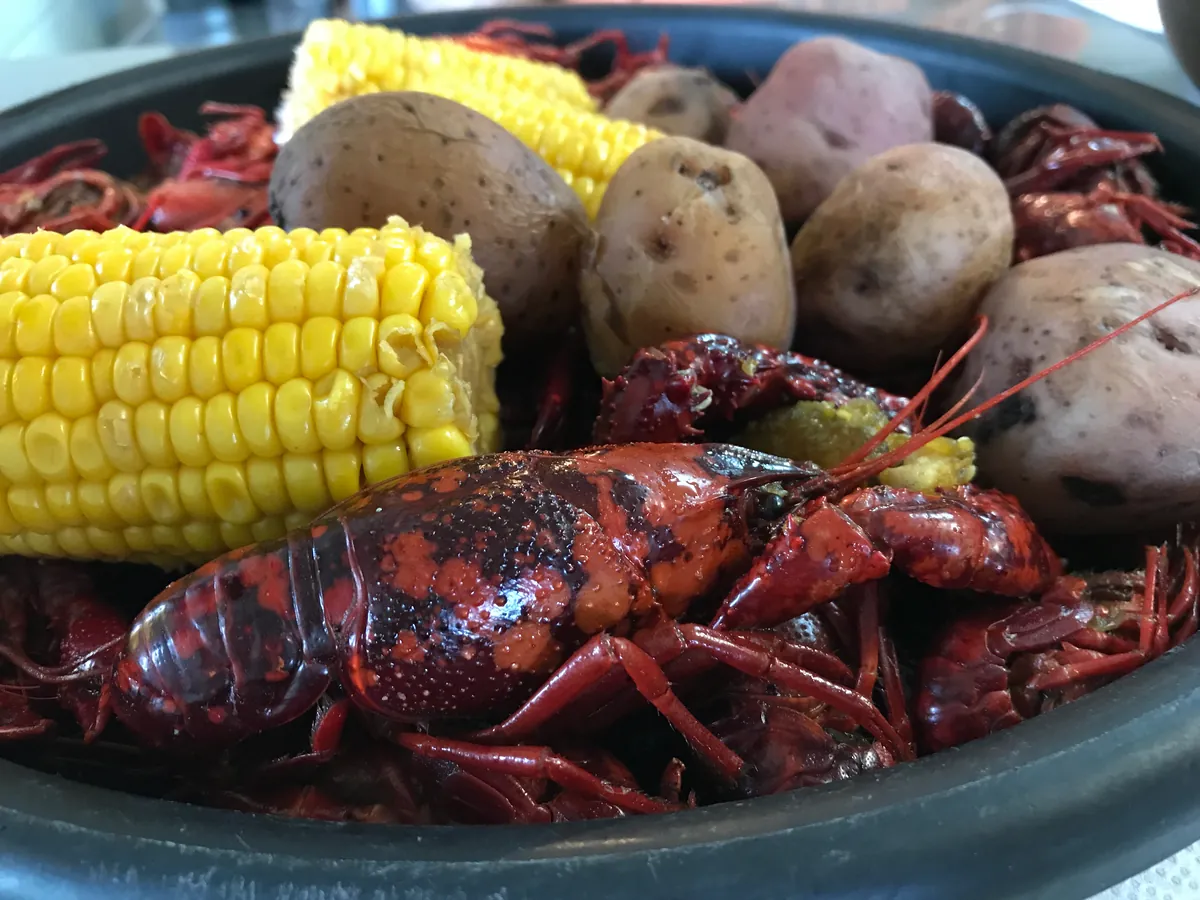
The crawfish boil is not a restaurant experience. It is a social structure. You need a table — a long one, covered in newspaper. You need a pot, at least 60 quarts. You need a propane burner and a crawfish basket and a cooler of beer and more people than you have chairs for. You dump the cooked crawfish directly onto the newspaper. Everyone eats with their hands. The crawfish — boiled with corn, potatoes, onions, garlic, lemons, and enough cayenne to require a moment of quiet reflection before the first bite — are eaten by twisting off the tail, pinching out the meat, and sucking the head. Sucking the head is not optional. That is where the seasoning lives. The season runs roughly January through June, peaking in March, April, and May. The size of the harvest varies with rainfall in the crawfish ponds of the Atchafalaya Basin. A poor crawfish year is discussed in the same tone as a drought or a flood. The Breaux Bridge Crawfish Festival, held the first full weekend of May, is the annual civic celebration of the crustacean that built the spring social calendar of an entire region.
By the 1960s, Cajun culture was in serious danger of disappearing. The language was being shamed out of schools. The music was considered embarrassing by the generation that had been told to assimilate. Young people were leaving for Houston and Baton Rouge. The dancehalls were closing. What happened next was not a government program or a tourism campaign. It was a series of acts of cultural defiance by people who decided their culture was worth saving. The Balfa Brothers played Newport in 1964 and returned home to Louisiana with the revelation that the outside world considered their music extraordinary. James Domengeaux founded CODOFIL in 1968 to fight for French in Louisiana schools. The 1974 Tribute to Cajun Music Concert filled Blackham Coliseum despite a flood — and became Festivals Acadiens. Barry Jean Ancelet at the University of Louisiana spent decades recording, documenting, and publishing the oral traditions and music that would otherwise have been lost. Festival International launched in 1987. By the time the world was paying attention to Cajun food and music in the 1990s, the revival had already been happening for twenty years, carried entirely by the people it belonged to.
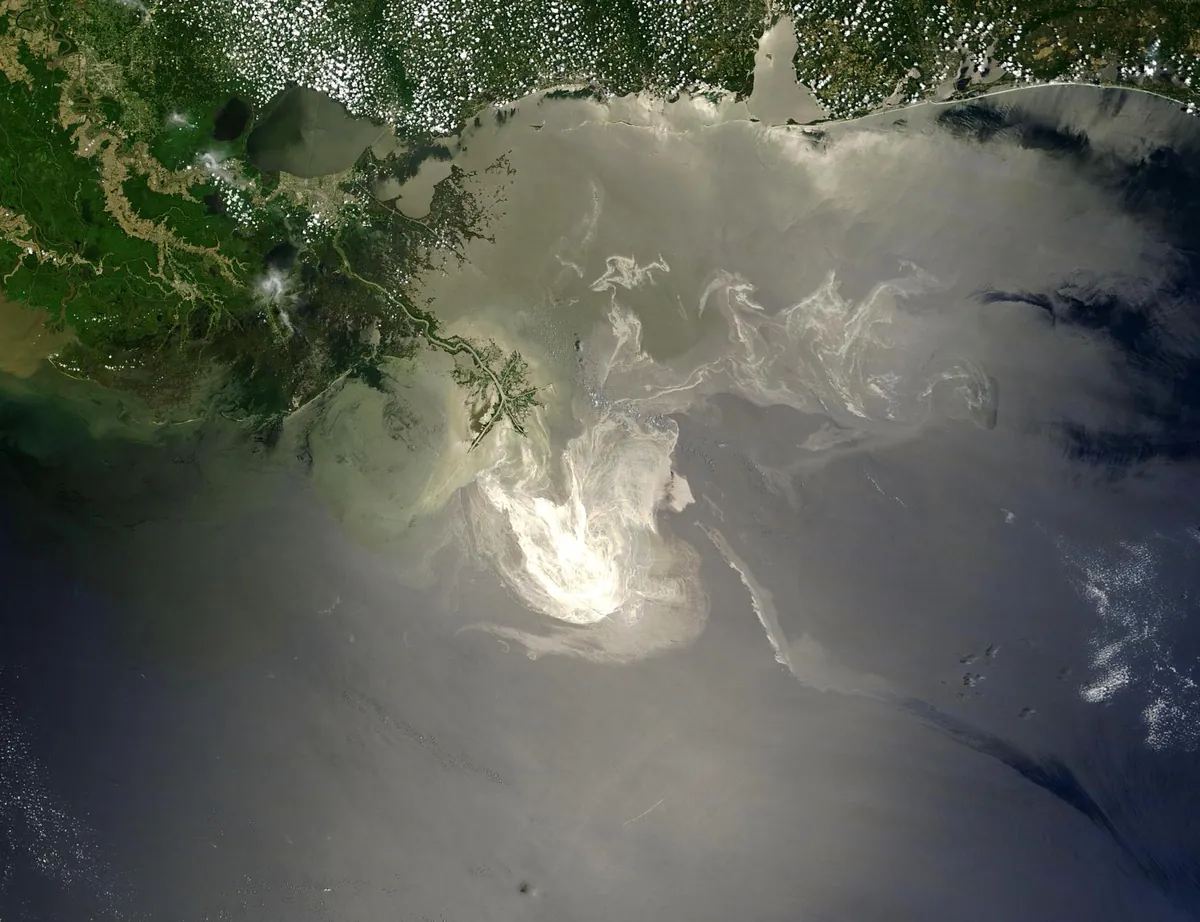
Until the 1940s, Lafayette was a Cajun market town built around sugarcane and cotton. Then offshore drilling arrived in the Gulf of Mexico, and everything changed. The first offshore oil well in history was drilled out of sight of land on November 14, 1947 — near Morgan City, 60 miles south. Lafayette sat at the intersection of I-10 and I-49, close enough to the Gulf to serve the industry, big enough to house it. Maurice Heymann built the Oil Center in 1952, and within seven years had 250 oil and gas companies under one roof. The city that had been defined by Cajun French, Catholic tradition, and the agricultural calendar was remade by roughnecks, engineers, and geologists from Houston and Oklahoma. The oil money built hospitals, universities, and arenas. The oil bust of the 1980s emptied office buildings and sent families to Houston. The boom-bust cycle has repeated. Through all of it, the Cajun culture that predates oil has proven more durable than the industry that tried to replace it.
Happening this month
Tickets & Shows
Before you go
Cajun and Black cane-country men on the same sugarcane dirt — who owned it, who worked it, who bled for it.
Filmed in the Acadiana marshes. The flat sky, the oilfields, the vanishing coast — it is this specific place, not a set.
Plan your trip
The only thing left to do is go.
Some of these are partner links — if you book through them, Portage may earn a commission at no extra cost to you.
Plan your visit
Editorial content compiled with AI assistance. Place details verified against public records.